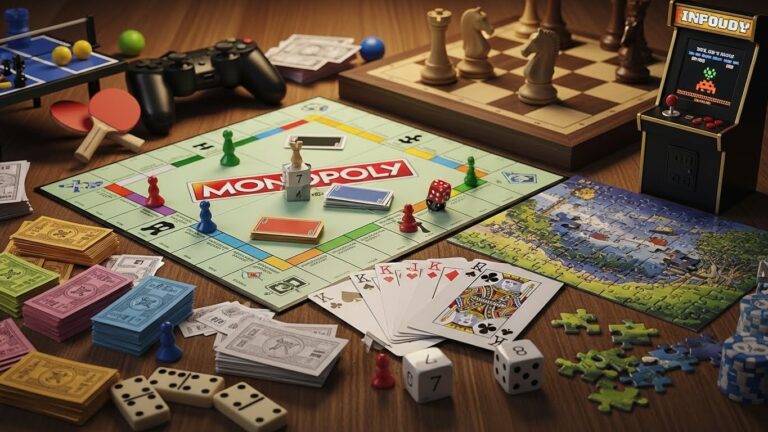

Introduction: A World Beyond Entertainment
Games have been an integral part of human history, providing not just entertainment, but also education, culture, and even social interaction. From the earliest known games played in ancient civilizations to the cutting-edge virtual realities of modern gaming, the world of games has evolved in astonishing ways. They have transformed from simple tools of leisure into powerful mediums for expression, learning, and connection. Today, games are not just confined to physical play spaces; they have spread across digital platforms, reaching billions of players worldwide. But why do games hold such an allure? How did they evolve into such a powerful force in modern culture? In this post, we will explore the history, impact, and future of games, examining how they have shaped and continue to influence our lives in profound ways.
The Origins of Games: A History Written in Play
The history of games stretches back to the dawn of civilization. Archaeological evidence shows that games have been played by nearly every culture throughout history. Ancient Egyptians, Greeks, and Romans all had their own versions of games that were not only forms of entertainment but also tools for teaching strategy, socializing, and even reflecting spiritual beliefs.
One of the earliest games, Senet, originated in ancient Egypt around 3100 BCE. This board game was played with pieces and a grid, and it held both entertainment and ritual significance, often being played in the context of religious beliefs. Similarly, Go, a strategic board game that dates back over 2,500 years in China, has remained popular throughout the centuries, demonstrating the enduring appeal of games that require intellect and foresight.
In Europe, games like chess became symbols of strategy and intellect. Chess, a game believed to have originated in India before spreading to Persia and then to Europe, has become a universal benchmark for cognitive skill. These early games laid the foundation for modern play, emphasizing strategy, competition, and social interaction, elements that are still present in games today.
The Rise of Video Games: A New Dimension of Play
While physical games have a rich history, the advent of video games in the 20th century marked a seismic shift in how we define play. The first video game, Pong, was released in 1972 by Atari, and it set the stage for what would become one of the largest entertainment industries in the world. Initially, video games were simple, pixelated experiences designed to be played on arcade machines. These early games, such as Space Invaders and Pac-Man, introduced players to the concept of interactive entertainment and established gaming as a global cultural phenomenon.
The 1980s and 1990s saw the birth of gaming consoles, personal computers, and the expansion of gaming into homes worldwide. The Nintendo Entertainment System (NES) and Sega Genesis brought games into living rooms, and titles like Super Mario Bros., The Legend of Zelda, and Sonic the Hedgehog became household names. These games captured players’ imaginations with colorful graphics, memorable characters, and immersive worlds.
As technology advanced, so did the complexity of video games. In the late 1990s and early 2000s, 3D graphics transformed the way games were designed and played. Games like Super Mario 64 and Final Fantasy VII demonstrated the potential of video games to offer expansive worlds, deep stories, and detailed characters. These games didn’t just entertain—they immersed players in experiences that felt almost as real as the physical world.
The Social Revolution of Online Gaming
One of the most transformative shifts in gaming came with the rise of online multiplayer games. The internet connected players around the world, allowing them to compete, cooperate, and socialize in real time. Games like World of Warcraft, Counter-Strike, and League of Legends created global communities where players from different countries and cultures could engage in shared virtual experiences.
Online gaming also gave birth to new forms of entertainment, such as game streaming and esports. Platforms like Twitch allowed gamers to broadcast their gameplay to millions of viewers, creating a new industry of content creators and professional gamers. Esports has grown into a multi-billion-dollar industry, with competitive gaming events filling arenas and attracting millions of viewers worldwide. The rise of esports has elevated gaming from a casual hobby to a professional sport, with sponsorships, prize money, and dedicated fan bases.
In addition to competitive play, many online games have incorporated social features that allow players to interact beyond the game itself. From chatting and making friends to sharing in-game achievements and participating in online events, games have become more than just entertainment; they are now a space for social interaction and connection.
The Appeal of Mobile Games: Gaming in the Palm of Your Hand
In recent years, mobile gaming has exploded in popularity. With smartphones becoming ubiquitous, games are now more accessible than ever before. Mobile games like Angry Birds, Candy Crush Saga, and Clash of Clans have captured the attention of millions of players, offering quick, easy-to-play experiences that can be enjoyed anywhere, anytime.
Mobile gaming has democratized access to games, allowing people who may not have the resources or interest in dedicated gaming consoles to enjoy interactive entertainment. The simplicity of many mobile games makes them accessible to a broad audience, from children to older adults, and their casual nature makes them perfect for short, convenient play sessions during daily commutes or downtime.
The success of mobile games has also influenced the design of modern games. Today, many console and PC games incorporate mobile-inspired mechanics, such as microtransactions, daily rewards, and in-game events, creating a more interconnected, accessible gaming ecosystem.
Games as a Creative Medium: The Art of Play
While games are often seen as a form of entertainment, they are also a medium for artistic expression. Video games today are far more than just gameplay—they are intricate works of art that combine storytelling, visual design, music, and interactivity.
Many modern games are designed to tell compelling stories, with rich narratives that rival those of films and novels. Games like The Last of Us, Red Dead Redemption 2, and Bioshock Infinite are celebrated not only for their gameplay but also for their deeply emotional and thought-provoking narratives. These games explore complex themes such as loss, redemption, and the human condition, giving players a chance to engage with stories in a way that traditional media cannot.
The artistry of video games is also evident in their design. From the sweeping landscapes of The Elder Scrolls V: Skyrim to the intricate details of The Witcher 3, the visual design of modern games is a testament to the creativity of developers. The art of video games has been recognized by museums, with exhibitions dedicated to showcasing the visual and design achievements of the medium.
Games and Education: Learning Through Play
Beyond entertainment, games have proven to be valuable educational tools. Educational games, often used in schools and learning environments, are designed to teach concepts in subjects such as mathematics, science, history, and language. These games engage students by making learning interactive and fun, providing immediate feedback and rewards for progress.
Games like Minecraft and Kerbal Space Program have been used to teach creativity, engineering, and scientific principles. Minecraft, for instance, allows players to build structures and explore virtual worlds, while also encouraging collaboration and problem-solving in multiplayer modes. Similarly, Kerbal Space Program teaches players about space exploration, physics, and aerodynamics in a fun and engaging way.
Serious games, designed for professional training, have also emerged in various fields, including medicine, the military, and aviation. These games simulate real-world situations, allowing individuals to practice skills in a safe and controlled virtual environment.
The Psychological and Emotional Impact of Games
Games have a profound psychological and emotional impact on players. They offer an escape from the stresses of daily life, providing a space where players can immerse themselves in different worlds and experiences. The sense of achievement, competition, and challenge in games triggers the brain’s reward system, releasing dopamine, the “feel-good” neurotransmitter.
Many players use games as a form of stress relief and emotional regulation. The challenge and structure of games can provide a sense of control and accomplishment, especially in times of uncertainty or emotional turmoil. Multiplayer games, in particular, offer social interactions that can combat loneliness and foster a sense of community.
At the same time, gaming has also been linked to addiction and unhealthy behavior in some individuals. As with any form of entertainment, moderation is key, and players must be mindful of the time spent in virtual worlds to maintain a healthy balance in their lives.
The Future of Gaming: Virtual Reality, AI, and Beyond
Looking ahead, the future of gaming holds limitless possibilities. One of the most exciting developments is virtual reality (VR), which promises to create fully immersive gaming experiences. VR technology allows players to enter virtual worlds and interact with them in real-time, offering a level of immersion never before seen in gaming. Games like Half-Life: Alyx and Beat Saber demonstrate the potential of VR to transport players to new dimensions of play.
Artificial intelligence (AI) is also set to play a significant role in the future of gaming. AI-driven characters and dynamic, responsive environments will make games more interactive and realistic. Games could adapt to players’ actions in real-time, creating unique and personalized experiences for every player.
Additionally, advancements in cloud gaming will make high-quality games accessible to a broader audience, regardless of their hardware. Services like Google Stadia and Microsoft’s Xbox Cloud Gaming are already offering gamers the ability to stream games to any device, eliminating the need for expensive consoles or PCs.
About the Author