
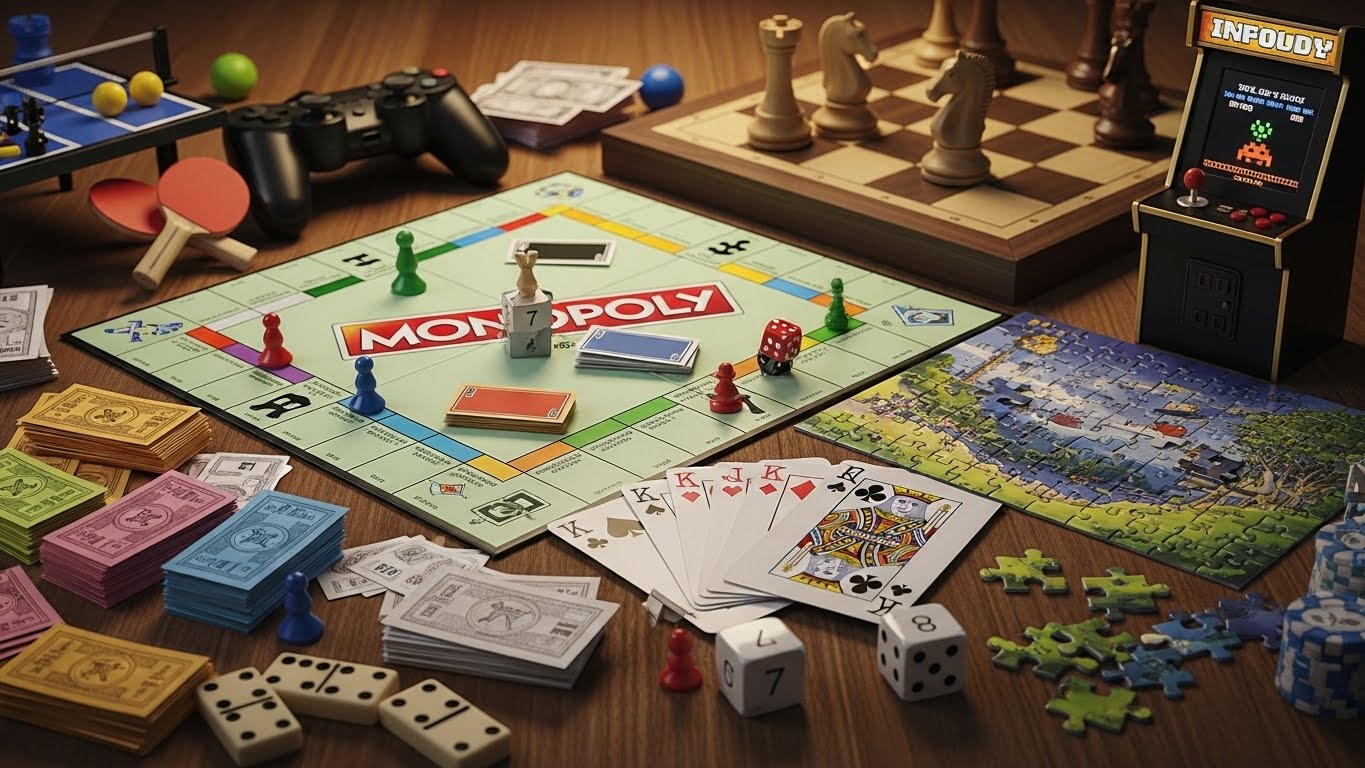
Games have been an integral part of human culture for thousands of years, evolving from simple, physical activities into complex digital experiences. Whether it’s a traditional board game, a competitive sport, or an immersive video game, games have always provided a source of entertainment, challenge, and social interaction. But games have also played a significant role in shaping society, offering numerous benefits beyond just fun. In this blog post, we’ll explore the history, evolution, and future of games, and examine the profound impact they have on individuals and society as a whole.
The Origins of Games: Play as a Fundamental Human Activity
Games, in their most basic form, are a universal aspect of human life. From ancient civilizations to modern-day society, people have always found ways to play. The earliest examples of games date back to ancient Egypt, where board games like Senet were played around 3100 BCE. Similarly, the ancient Greeks had games like Petteia and Knucklebones, while the Romans were known for their gladiatorial contests, which, although brutal, were seen as both sport and entertainment.
In many ways, the origins of games are rooted in the idea of play as a social activity. Play is not only a means of passing time but also a way to build social bonds, develop skills, and experience joy. For children, play is essential for cognitive development, teaching them everything from basic motor skills to more complex problem-solving abilities. But the importance of play extends beyond childhood. Even as adults, games offer a valuable outlet for stress relief, creativity, and competition.
The Evolution of Board Games: From Strategy to Socialization
The development of board games marked a significant milestone in the history of games. While many ancient civilizations engaged in similar forms of play, it wasn’t until the medieval period that board games became more formalized. Games like chess, which originated in India around the 6th century, evolved over time into one of the world’s most widely played and respected games of strategy. Chess not only helped to sharpen the mind but also introduced the idea of strategic thinking and planning, concepts that are integral to many of today’s modern games.
Other board games such as Go (originating in China over 2,500 years ago) and backgammon also began to take shape, emphasizing strategic gameplay, decision-making, and psychological tactics. These games were often a form of intellectual exercise and socialization, allowing people from different backgrounds to engage in friendly competition.
In the 20th century, board games saw an explosion in popularity, especially with the rise of iconic games like Monopoly, Scrabble, and Clue. These games weren’t just about competition; they also became vehicles for family interaction, social gatherings, and leisure activities. The introduction of more complex games such as Risk and Settlers of Catan added depth and strategy, creating a bridge between traditional board games and modern tabletop role-playing games (RPGs).
The Rise of Video Games: A New Era of Digital Play
The 20th century also saw the dawn of a new type of game: the video game. What began as simple, arcade-based games like Pong and Space Invaders in the 1970s quickly evolved into a multi-billion-dollar industry, changing the way we think about play and entertainment. In the early years of gaming, the focus was on relatively simple mechanics. Players controlled an avatar or a spaceship on a screen and competed for the highest score. But as technology improved, so did the complexity of the games.
By the 1980s and 1990s, home gaming consoles like the Nintendo Entertainment System (NES) and Sega Genesis brought video games into the living rooms of millions. Iconic games like Super Mario Bros., The Legend of Zelda, and Sonic the Hedgehog became household names, marking the beginning of a golden age of gaming. During this time, video games began to shift from purely arcade-style games into more expansive, story-driven experiences.
The 1990s also saw the emergence of personal computer-based games, with classics like Doom and Warcraft introducing multiplayer elements and pushing the boundaries of game design. These games laid the groundwork for the next major evolution in gaming: the rise of online gaming.
The Digital Revolution: Online and Mobile Gaming
The early 2000s marked a transformative era in gaming with the rise of online and mobile games. The introduction of broadband internet allowed for seamless online multiplayer experiences, revolutionizing how people played together. Massively multiplayer online games (MMOs) like World of Warcraft and EVE Online connected players from all over the world, creating vast, interconnected universes where individuals could cooperate, compete, and socialize.
In addition to the MMO genre, online gaming also gave birth to competitive esports, a rapidly growing industry in which professional gamers compete for large cash prizes and fame. Esports has become a global phenomenon, with games like League of Legends, Fortnite, and Counter-Strike: Global Offensive attracting millions of viewers and creating dedicated fanbases.
Mobile gaming, powered by smartphones and tablets, opened up gaming to a whole new audience. With the advent of the App Store and Google Play, millions of people could download games at the touch of a button. Popular mobile games like Angry Birds, Candy Crush Saga, and Pokémon Go became cultural touchstones, offering an easy and accessible way to play on the go. Mobile gaming democratized access to games, reaching people who had never considered themselves “gamers” before.
The Role of Gaming in Social Interaction and Community Building
One of the most profound impacts that games have had in recent years is the way they foster social interaction and community building. Multiplayer games, both online and offline, have become spaces where individuals can connect, collaborate, and communicate. In games like Minecraft, Fortnite, and Among Us, players work together to achieve common goals, whether it’s building structures, battling enemies, or solving puzzles.
Social interaction in games has led to the rise of gaming communities and fan cultures that extend far beyond the game itself. Players form friendships, create fan art, write stories, and share their experiences on social media platforms like Reddit, Discord, and YouTube. Streaming services like Twitch allow gamers to broadcast their play in real-time, creating an interactive experience where viewers can chat with streamers and influence the game itself.
In many ways, gaming has become a form of socializing and entertainment that transcends traditional boundaries. It provides a space for people to connect across geographical, cultural, and generational divides. These virtual communities have even led to the creation of professional gaming careers, as influencers and esports athletes build their brands and monetize their content.
The Benefits of Gaming: Beyond Entertainment
While games are often viewed primarily as a form of entertainment, they offer a wide range of benefits that extend to cognitive, emotional, and social development. Research has shown that gaming can improve problem-solving skills, hand-eye coordination, and spatial awareness. Puzzle games like Tetris and strategy games like StarCraft require players to think critically and plan their moves, while action games help improve reflexes and reaction time.
Games also have a positive impact on mental health. They provide an outlet for stress relief, relaxation, and escapism. For many individuals, games offer a sense of accomplishment, purpose, and control, especially in times of personal difficulty. Games like Animal Crossing or The Sims are particularly noted for their ability to provide a calming, stress-free environment.
Furthermore, gaming can promote creativity. Games like The Legend of Zelda and Grand Theft Auto encourage players to explore expansive, open-world environments, where they can interact with the game’s world in unique ways. In Minecraft, players are free to build their own virtual worlds, allowing for boundless creativity and imagination. This creative aspect of gaming has made it a powerful tool in education, with educators incorporating games into their teaching strategies to engage students in new and innovative ways.
The Future of Games: What Lies Ahead?
As we look to the future, the gaming industry shows no signs of slowing down. Advances in virtual reality (VR) and augmented reality (AR) are pushing the boundaries of what’s possible, offering players more immersive and interactive experiences. VR headsets like the Oculus Rift and PlayStation VR allow players to enter fully realized 3D environments, while AR games like Pokémon Go continue to innovate by blending the real and virtual worlds.
Cloud gaming services like Google Stadia and Xbox Cloud Gaming are making it possible for players to stream games directly to their devices without the need for expensive hardware. This shift could democratize access to high-quality gaming, enabling more people to enjoy cutting-edge games on their smartphones, laptops, or even televisions.
Additionally, the rise of artificial intelligence (AI) in gaming could revolutionize the way games are designed and played. AI-powered NPCs (non-playable characters) could offer more dynamic and realistic interactions, while AI-driven storylines could lead to games with ever-evolving plots that change based on player choices.
The future of gaming is undoubtedly bright, as technology continues to innovate and offer new ways to play, interact, and connect. The growth of gaming will likely lead to even more creative and immersive experiences, as games continue to evolve and shape the cultural landscape.
Conclusion: Games as a Universal Language
Games have always been a fundamental part of human culture, offering entertainment, challenge, and connection. From the earliest board games to the cutting-edge experiences of virtual reality, games have continually evolved, shaping not just our leisure time, but also our society. As technology continues to advance, the potential for games to inspire, educate, and unite people is limitless.
In an increasingly connected world, games have become a universal language—one that transcends borders, cultures, and generations. They provide us with opportunities to explore, compete, socialize, and create, while offering benefits that extend far beyond entertainment.
About the Author