
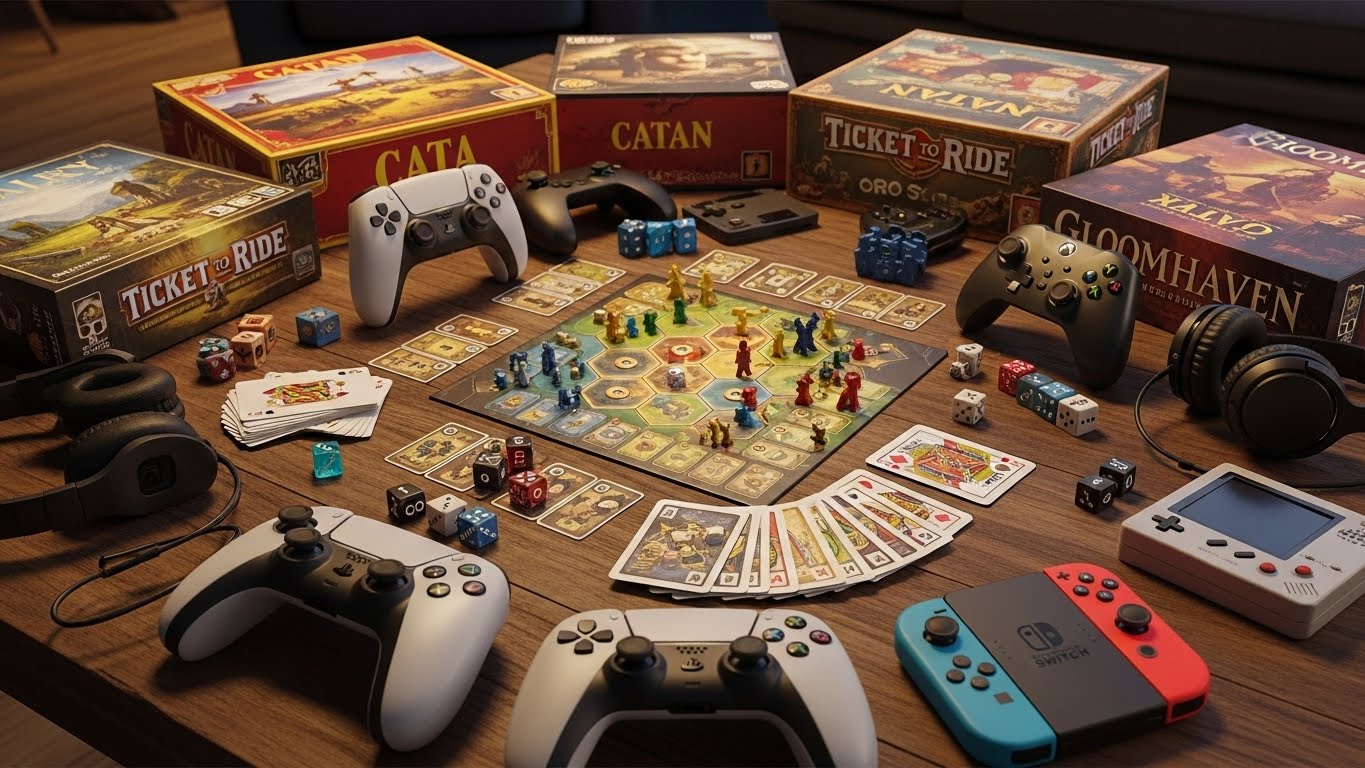
Gaming is no longer just a hobby; it’s a cultural phenomenon that has become an integral part of modern life. What began as simple pixelated screens and rudimentary gameplay has now evolved into complex, visually stunning worlds that rival the immersive experiences of movies and television. From casual mobile games to high-end console and PC titles, gaming has something for everyone. In this blog post, we’ll explore the history of gaming, its cultural impact, the rise of esports, and where the industry is headed in the future.
The Early Days: The Birth of Gaming
The origins of video gaming trace back to the early 1950s and 1960s, when the concept of interactive entertainment began to take shape. One of the first recognized video games, Tennis for Two, was created in 1958 by physicist William Higinbotham. While the game itself was simple—a two-player tennis simulation displayed on an oscilloscope—its significance lies in its ability to capture the imagination of those who played it.
The early 1970s brought about a more widely recognized breakthrough: Pong, the first commercially successful arcade game, released by Atari in 1972. Pong was a simple simulation of table tennis, but its appeal was massive, sparking the growth of the arcade gaming industry. It wasn’t long before video game consoles became a fixture in households. The Atari 2600, released in 1977, is often credited with bringing gaming into the living room, laying the foundation for the expansive home console market that would follow.
The 1980s were a pivotal decade for video games. The advent of titles like Space Invaders (1978), Pac-Man (1980), and Donkey Kong (1981) pushed the boundaries of what video games could be, introducing more engaging gameplay mechanics and iconic characters. These early games would become cultural icons, and the video game industry began to expand rapidly, particularly in the United States and Japan.
The 1990s: The Rise of 3D Gaming and Consoles
The 1990s marked a significant shift in the gaming landscape, thanks in large part to the advent of 3D graphics. The introduction of consoles like the Sony PlayStation, Nintendo 64, and Sega Saturn allowed developers to create games that were more immersive and complex than anything that had come before. With the power to render 3D environments, developers began crafting intricate worlds and storylines that were far beyond the capabilities of earlier 2D games.
One of the defining titles of the 1990s was Super Mario 64, which launched alongside the Nintendo 64 in 1996. The game revolutionized platformers by introducing 3D environments and innovative camera controls, setting the stage for future games to follow. In the same decade, other groundbreaking titles such as Final Fantasy VII (1997) and The Legend of Zelda: Ocarina of Time (1998) pushed the boundaries of storytelling in games, featuring expansive worlds, deep narratives, and characters that players could connect with on an emotional level.
Meanwhile, the fighting game genre took off with classics like Street Fighter II (1991) and Mortal Kombat (1992), while first-person shooters (FPS) like Doom (1993) and Quake (1996) paved the way for the explosion of multiplayer gaming. These developments laid the groundwork for many of the gaming genres that dominate the industry today.
The 2000s: Online Gaming and the Emergence of Esports
The new millennium ushered in a new era for gaming, one that was dominated by the rise of online multiplayer experiences. Broadband internet became more accessible, allowing players to connect with each other across the globe, creating a massive shift in the gaming culture.
In 2001, Microsoft launched the Xbox console and introduced Halo: Combat Evolved, a first-person shooter that became a sensation and played a huge role in popularizing online gaming. Halo offered fast-paced action and an engaging multiplayer mode, paving the way for games like Call of Duty and Battlefield, which would become staples in the online gaming community.
The 2000s also marked the rise of MMORPGs (Massively Multiplayer Online Role-Playing Games), with World of Warcraft (2004) leading the charge. WoW became a cultural phenomenon, boasting millions of active subscribers and offering a rich, immersive world where players could live out virtual lives, completing quests, engaging in player-versus-player combat, and exploring vast landscapes together.
At the same time, the gaming industry saw the rise of esports. Games like StarCraft, Warcraft III, and Counter-Strike began to attract competitive players, and tournaments for these games started to draw large audiences. The development of esports was further boosted by streaming platforms like Twitch, which launched in 2011. Twitch allowed gamers to broadcast their gameplay live, offering fans a way to watch and interact with their favorite players and streamers. Esports would grow into a multi-billion-dollar industry, with tournaments offering significant cash prizes and attracting millions of viewers.
The 2010s: Mobile Gaming, Indie Games, and Virtual Reality
The 2010s saw significant changes in how games were developed, played, and consumed. Mobile gaming emerged as one of the most significant shifts in the industry, with smartphones becoming a ubiquitous platform for gaming. Games like Angry Birds (2009), Candy Crush Saga (2012), and Clash of Clans (2012) became massive hits, allowing millions of people who had never considered themselves gamers to engage with simple yet addictive titles. The rise of mobile gaming also led to a boom in free-to-play models, with in-app purchases becoming a common way to monetize games.
Meanwhile, indie games began to flourish. Titles like Minecraft (2011), Undertale (2015), and Stardew Valley (2016) demonstrated that small, independent developers could create games that were just as innovative and beloved as those made by larger studios. The success of these indie games proved that storytelling, creativity, and passion could outshine big budgets and flashy graphics. Platforms like Steam, itch.io, and the PlayStation Store made it easier for indie developers to distribute their games, and the indie gaming scene exploded as a result.
The 2010s also saw the development of virtual reality (VR), which offered players the chance to experience games in a fully immersive way. While VR gaming was still in its infancy, titles like Beat Saber (2018) and Half-Life: Alyx (2020) demonstrated the potential for VR to revolutionize the gaming experience. The ability to physically interact with the game world—whether through hand controllers, motion sensors, or even full-body tracking—offered a new dimension of engagement that could change how games are played in the future.
The 2020s and Beyond: The Future of Gaming
As we look to the future, the gaming industry shows no signs of slowing down. Advances in technology, including cloud gaming, ray tracing, and artificial intelligence (AI), are pushing the boundaries of what’s possible in the gaming world.
One of the most exciting developments in recent years is the rise of cloud gaming platforms like Google Stadia, NVIDIA GeForce Now, and Xbox Cloud Gaming. These services allow players to stream games directly to their devices without the need for powerful hardware. This opens up gaming to a broader audience, as people no longer need an expensive gaming PC or console to play the latest titles. Cloud gaming has the potential to democratize gaming, making it more accessible and inclusive for players around the world.
Another major development is the continued growth of esports. With massive prize pools, professional leagues, and sponsorships from major brands, esports has become a mainstream form of entertainment. Games like League of Legends, Dota 2, and Fortnite continue to draw millions of viewers, while emerging titles like Valorant and Apex Legends are quickly establishing themselves as competitive esports games.
In addition to competitive gaming, the concept of gaming as a social experience is also expanding. Games like Fortnite have incorporated social elements, allowing players to engage in virtual concerts, watch movies, or participate in in-game events. This shift toward “social gaming” is likely to continue, as developers look for new ways to bring people together within their digital worlds.
Finally, the future of gaming may be shaped by the integration of artificial intelligence (AI). AI can be used to create smarter, more dynamic NPCs (non-player characters) that react to player decisions in realistic ways. It could also be used in procedural generation, creating vast, unpredictable worlds that evolve with player actions. AI could also enhance player experiences through personalized content and recommendations.
Conclusion: The Never-Ending Evolution of Gaming
From its humble beginnings in arcades and living rooms to its current status as a global cultural force, gaming has come a long way. It has evolved from a niche pastime to a mainstream entertainment medium that influences art, culture, technology, and even social dynamics. As technology continues to evolve, so too will the ways in which we play, experience, and enjoy games.
With cloud gaming, VR, esports, and AI on the horizon, the future of gaming is as exciting as it is unpredictable. What remains certain is that the world of gaming will continue to captivate millions, uniting players across the globe in shared experiences and adventures. Whether you’re an esports enthusiast, a casual gamer, or someone who enjoys the artistry and storytelling of modern games, the world of gaming offers something for everyone—and it’s only going to get better.
About the Author