
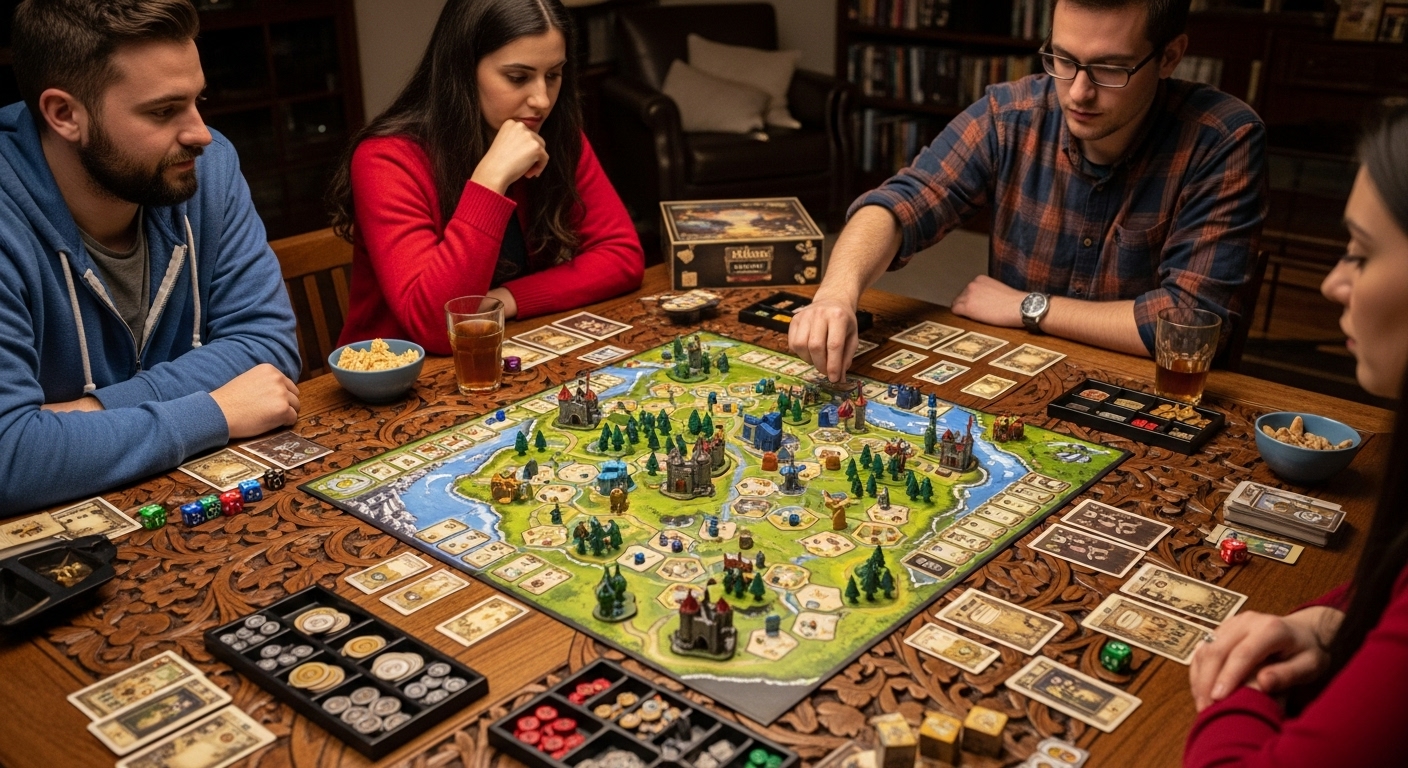
Introduction: The Universal Magic of Games
Games have existed in various forms for centuries, captivating the human imagination across cultures and generations. From ancient board games and simple dice games to the immersive, technology-driven experiences of today’s digital age, games have always been a fundamental part of human society. Whether for recreation, education, or competition, the act of playing games transcends time, age, and geography. But what is it about games that has given them such enduring appeal? Why do they continue to thrive in a rapidly changing world? In this blog post, we will explore the evolution of games, how they impact our lives, and where they are headed in the future.
The Beginnings of Play: Ancient Games and Their Cultural Significance
The origins of games can be traced back thousands of years. Ancient civilizations created games not only for entertainment but also for purposes of education, strategy, and even spiritual reflection. The earliest known board game, Senet, was found in Egypt and dates back to around 3100 BCE. Similarly, the game of Go, originating in China over 2,500 years ago, has remained popular for centuries. These early games were not just leisurely pastimes—they were deeply intertwined with the culture, philosophy, and social structures of their time.
For the ancient Greeks and Romans, games like dice and chess (which is believed to have originated in India and later spread to the West) were used to hone strategic thinking, teach social interactions, and provide entertainment. These games laid the groundwork for the more structured games we see today, particularly in how they emphasized competition, strategy, and skill. Throughout history, games have evolved alongside human civilization, reflecting the technological, social, and philosophical advancements of the time.
The Birth of Video Games: The Digital Revolution
The 20th century marked a revolutionary shift in the world of games. The advent of computers and digital technology gave birth to video games, which would go on to reshape the entertainment landscape forever. The first video game, Pong, was released in 1972 by Atari, introducing the world to the concept of interactive digital entertainment. It was a simple game, but its impact was monumental, setting the stage for what would become an industry worth billions.
As video game technology advanced, so did the complexity of the games themselves. The 1980s and 1990s saw the introduction of gaming consoles such as the Nintendo Entertainment System (NES) and Sega Genesis, as well as the personal computer, which allowed for more sophisticated gaming experiences. Iconic titles like Super Mario Bros., Pac-Man, and The Legend of Zelda became household names, capturing the imaginations of players worldwide.
The technological leap into 3D graphics in the late 1990s and early 2000s further transformed video gaming. Games like Super Mario 64 and Final Fantasy VII showcased the power of 3D worlds, allowing players to explore vast, detailed environments. These advances in graphics and storytelling elevated games to a new level, turning them into complex, immersive experiences rather than simple pastimes.
The Rise of Online Gaming: Connecting the World Through Play
With the rise of the internet in the late 1990s and early 2000s, online gaming emerged as a revolutionary new way for players to connect and interact. No longer were games limited to single-player experiences; multiplayer games allowed players to compete and cooperate with others in real-time, regardless of geographical location. Games like World of Warcraft and Counter-Strike created online communities where players could engage with each other in vast, digital worlds.
Online gaming also led to the creation of esports, which has evolved into a massive global industry. Esports tournaments attract millions of viewers worldwide, and professional gamers compete for enormous prizes and sponsorships. The rise of esports has solidified gaming as a legitimate form of entertainment, with the same level of passion, organization, and professional recognition that traditional sports enjoy.
In addition to esports, social gaming experiences like Fortnite and Minecraft have helped to blur the lines between gaming and social media. These games are not just about playing—they are platforms for social interaction, where players can build friendships, collaborate on creative projects, and participate in virtual events. The rise of gaming influencers and streamers on platforms like Twitch has further fueled the social aspect of gaming, creating new ways for players to share their experiences and connect with a wider audience.
The Evolution of Mobile Gaming: Gaming on the Go
In the last decade, mobile gaming has become one of the most dominant forms of gaming. With the advent of smartphones, games are now more accessible than ever before. Mobile gaming allows players to engage in quick, casual gaming experiences anywhere and anytime. Popular games like Candy Crush Saga, Angry Birds, and Pokémon GO have demonstrated the potential of mobile gaming to reach a wide audience, including people who may not consider themselves traditional gamers.
What makes mobile gaming particularly appealing is its simplicity and accessibility. Unlike traditional console or PC games that often require hours of commitment, mobile games can be played in short bursts, making them ideal for busy individuals. Whether on the bus, during lunch breaks, or while waiting in line, mobile gaming offers a convenient and entertaining escape from the daily grind.
Moreover, mobile games have helped to break down barriers by reaching a broader demographic. Mobile gaming is not limited to a particular age group or skill level—people of all ages can enjoy mobile games, from children playing Clash Royale to older adults enjoying a game of Solitaire. The accessibility of mobile games has democratized gaming, making it available to virtually anyone with a smartphone.
The Psychological Appeal of Games: Why We Play
Games are more than just entertainment—they tap into deep psychological mechanisms that make them compelling and addictive. The brain rewards us for completing tasks, solving puzzles, and achieving goals, and games are designed to capitalize on this reward system. Whether it’s through leveling up in an RPG, earning points in a competitive game, or completing a puzzle, games provide a sense of accomplishment and satisfaction.
Additionally, games often provide an element of escapism, allowing players to immerse themselves in virtual worlds where they can temporarily escape the stresses and challenges of real life. This sense of immersion is especially evident in role-playing games (RPGs), where players can step into the shoes of characters with unique stories, motivations, and challenges. The ability to live vicariously through these characters offers players a sense of control and agency that they may not experience in their everyday lives.
Multiplayer games, in particular, offer a social dimension that many players find appealing. These games create a sense of community, allowing players to connect with others, form teams, and collaborate toward common goals. Whether it’s working together to defeat a boss in World of Warcraft or competing against friends in Fortnite, multiplayer games foster social interactions that are deeply rewarding.
The Artistic and Cultural Impact of Games
While games were once seen purely as entertainment, they have increasingly been recognized as an art form. Video games are no longer just about gameplay—they are complex works of art that combine visual design, storytelling, music, and interactivity. Games like Journey, The Last of Us, and Red Dead Redemption 2 are hailed not only for their gameplay but also for their emotional depth, narrative complexity, and stunning visuals.
The art of game design has evolved into a highly sophisticated discipline. Developers craft intricate worlds, design realistic character models, and create compelling storylines that rival those of movies and novels. The marriage of art and technology in video games has made them a legitimate form of creative expression, with many games being featured in art galleries and museums around the world.
Moreover, games are a reflection of culture. They incorporate elements of history, mythology, and social issues, often using gameplay as a medium for exploration and commentary. For example, Bioshock Infinite tackles themes of American exceptionalism and social inequality, while The Witcher 3 explores complex moral dilemmas in a fantasy setting. These games show how the medium has evolved beyond simple entertainment to become a platform for thought-provoking narratives and cultural exploration.
The Future of Gaming: Virtual Reality, AI, and Beyond
As technology continues to evolve, the future of gaming holds exciting possibilities. Virtual reality (VR) is already beginning to transform the way we experience games, offering fully immersive experiences that allow players to step into digital worlds and interact with them in ways that were once unimaginable. VR games like Half-Life: Alyx and Beat Saber are already providing a glimpse into this new frontier of gaming.
Artificial intelligence (AI) is another area that is poised to revolutionize gaming. AI can be used to create more intelligent and responsive non-playable characters (NPCs), making the world feel more alive and dynamic. Additionally, AI could enable games to adapt to individual players, offering a personalized experience that responds to their actions, preferences, and playstyle.
Cloud gaming, where games are streamed directly from remote servers to players’ devices, is also on the rise. This technology allows gamers to access high-quality games without the need for expensive hardware. As internet speeds increase and latency improves, cloud gaming could make gaming more accessible than ever before, allowing players to stream games on their phones, tablets, or even smart TVs.
Conclusion: The Enduring Power of Play
Games have come a long way since their humble beginnings, evolving from ancient pastimes to complex, interactive experiences that shape our culture, connect us with others, and offer us an escape from reality. Whether played on a mobile phone, in a virtual reality headset, or on a gaming console, games continue to captivate us with their ability to challenge, entertain, and engage.
About the Author