
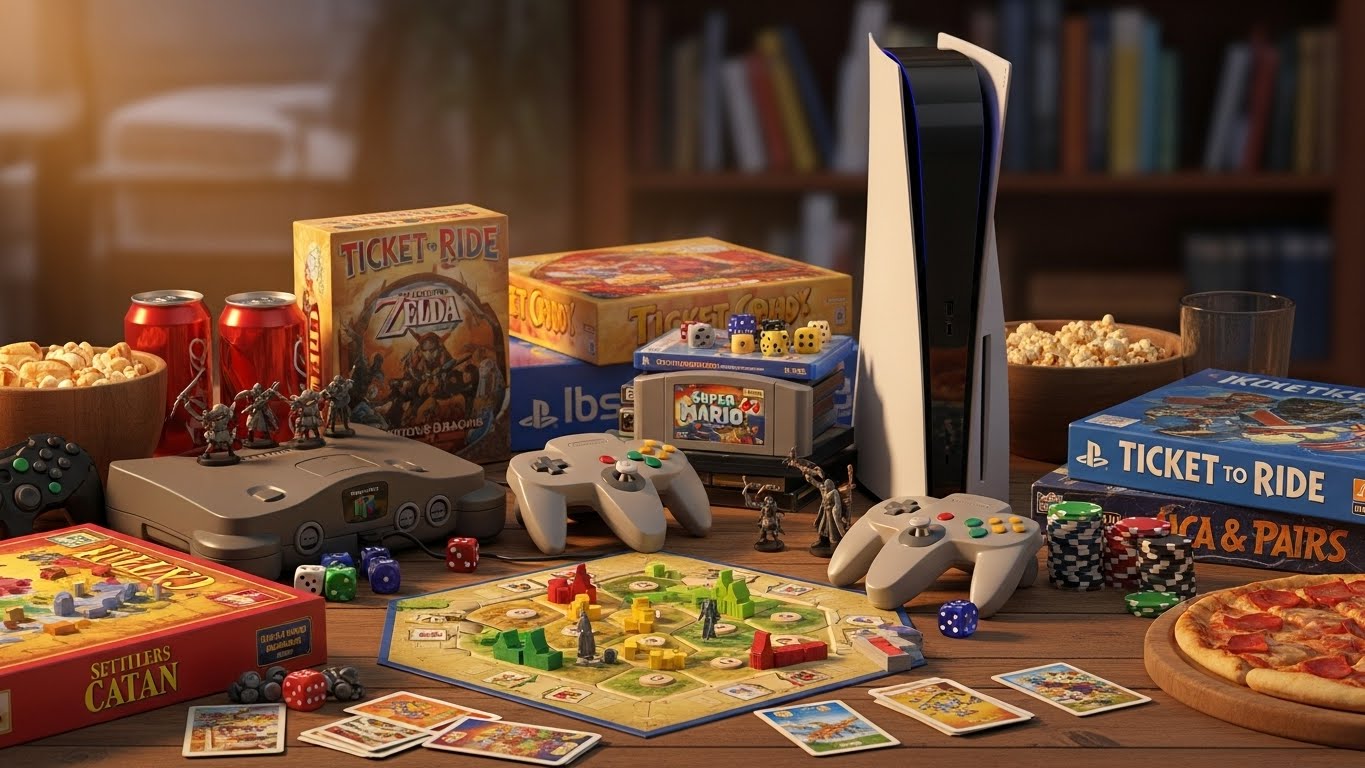
Games have been an essential part of human life for thousands of years. From ancient board games to modern video games, they have entertained, educated, and brought people together across generations. Games are not just pastimes—they reflect human creativity, culture, and the way we interact with each other. This blog explores the history, evolution, impact, and future of games, highlighting how they continue to shape our world.
The Origins of Games
The history of games can be traced back to ancient civilizations. Early humans created games to entertain, teach, and connect with others. Board games, dice games, and simple puzzles were common in societies like ancient Egypt, Mesopotamia, India, and China.
One of the earliest known board games is Senet, dating back to 3100 BCE in Egypt. Players navigated a board according to dice rolls, combining strategy with luck. In China, Go emerged over 2,500 years ago as a game of strategy and skill, emphasizing balance, planning, and patience. Chess, developed in India, tested intellect and foresight and spread worldwide over centuries.
These early games were more than entertainment; they reflected cultural values, taught life skills, and encouraged critical thinking. They set the foundation for the complex games we enjoy today.
Traditional Games Across Cultures
Traditional games vary widely across cultures, reflecting local customs, history, and social norms. Games like tag, hide-and-seek, and marbles have entertained children for generations. Regional variations of board games, card games, and outdoor sports show how play adapts to different environments and societies.
In Japan, games such as Shogi and Kendama blend strategy and dexterity. In Africa, Mancala and other counting games encourage mathematical thinking. European card games and lawn games like bocce and croquet developed alongside social gatherings, emphasizing community and leisure.
These traditional games show that play has always been central to social interaction, education, and recreation, connecting communities through shared experiences.
The Rise of Modern Board and Card Games
The 19th and 20th centuries saw the rise of modern board and card games. Monopoly, Scrabble, Clue, and Risk became global favorites, offering strategic challenges, family-friendly fun, and competitive play. Card games like Poker, Bridge, and Solitaire gained popularity for their blend of luck, skill, and social engagement.
These games were often more accessible than earlier forms, requiring fewer resources and appealing to a wide audience. They provided entertainment in homes, social gatherings, and schools, further establishing games as a central form of leisure.
The Birth of Video Games
The late 20th century brought a revolution with the advent of video games. Early titles like Pong, Space Invaders, and Pac-Man introduced digital play to arcades, captivating audiences with interactive challenges. Home consoles such as the Atari 2600 and Nintendo Entertainment System allowed people to enjoy games without leaving their living rooms.
Video games combined visual storytelling, strategy, and skill, creating immersive experiences unlike anything before. This era established many genres, including platformers, first-person shooters, role-playing games, and simulation games, each appealing to different types of players.
Gaming Communities and Social Interaction
The internet transformed games into global social experiences. Online multiplayer games allow players to connect, compete, and collaborate across continents. Massively multiplayer online games (MMORPGs) like World of Warcraft create virtual worlds where thousands of players interact, complete quests, and build communities.
Gaming fosters friendships and teamwork. Players share strategies, create content, and form social bonds that extend beyond the screen. Games have become spaces for collaboration, creativity, and cultural exchange, highlighting their role in building human connection.
Competitive Gaming and Esports
Esports has turned competitive gaming into a professional industry. Games like League of Legends, Dota 2, Fortnite, and Counter-Strike host tournaments with massive prize pools and global audiences. Professional players train rigorously, similar to traditional athletes, and competitions are broadcast to millions of fans worldwide.
Esports has created career opportunities beyond playing. Coaches, commentators, analysts, and event organizers contribute to a vibrant ecosystem that supports talent, entertainment, and business. Universities even offer esports scholarships, demonstrating the legitimacy of gaming as a professional field.
Mobile Gaming and Accessibility
The rise of smartphones made gaming more accessible than ever. Mobile games cater to casual players and hardcore enthusiasts alike. Titles like Candy Crush, Clash of Clans, and PUBG Mobile reach millions of users, providing quick, convenient entertainment on the go.
Mobile gaming has broadened the audience for games, including demographics that may not have traditionally played console or PC games. Social features like leaderboards, challenges, and collaborative gameplay further enhance engagement and connectivity.
Educational and Cognitive Benefits of Games
Games are more than fun—they can improve learning and cognitive skills. Puzzle and strategy games enhance problem-solving, critical thinking, and memory. Simulation and management games teach planning, decision-making, and resource management. Narrative-driven games encourage empathy, creativity, and perspective-taking.
Gamification, the application of game principles in education and work, has shown success in motivating learners and improving engagement. Games provide a safe, interactive environment to practice skills, explore scenarios, and learn from mistakes.
The Cultural Impact of Games
Games influence culture and reflect societal values. Popular video games, board games, and card games inspire fashion, music, art, and literature. Iconic characters and narratives become cultural touchstones, shaping the way people think, play, and create.
Games also provide platforms for storytelling that address social issues, identity, and morality. Through gameplay, players experience complex scenarios, make ethical decisions, and engage with themes that mirror real-world challenges. Games are both entertainment and a lens into human society.
Economic Significance of the Gaming Industry
The gaming industry is a global economic powerhouse. It generates billions in revenue through game sales, in-game purchases, subscriptions, and merchandise. Beyond development, the industry supports careers in design, programming, marketing, event management, and content creation.
Independent game developers contribute to diversity and innovation, producing unique experiences that appeal to niche audiences. Gaming also drives technological progress in areas like virtual reality, artificial intelligence, and interactive storytelling, influencing industries beyond entertainment.
Challenges Facing the Gaming World
Despite its growth, the gaming industry faces challenges. Excessive screen time and addiction are concerns for both young and adult players. Online communities sometimes experience harassment, toxicity, and cyberbullying, requiring moderation and safety measures.
Accessibility and inclusivity remain ongoing issues, as marginalized groups often face barriers in both playing and creating games. Developers also face high pressure to release products quickly, which can lead to stress and burnout. Addressing these challenges is essential for a sustainable, responsible, and diverse gaming ecosystem.
The Future of Games
The future of gaming promises innovation and immersive experiences. Virtual reality and augmented reality are creating interactive worlds where players can explore, collaborate, and compete in unprecedented ways. Cloud gaming eliminates hardware barriers, allowing players to access high-quality games on multiple devices.
Artificial intelligence enhances gameplay, storylines, and adaptive challenges. Cross-platform play and interactive storytelling blur the lines between gaming, social media, and entertainment, creating experiences that are more engaging and participatory than ever before.
Why Games Matter
Games are more than entertainment—they are a reflection of human creativity, culture, and connection. They teach problem-solving, critical thinking, collaboration, and perseverance. They inspire imagination and provide emotional release, social interaction, and lifelong learning.
From ancient board games to modern esports tournaments, games continue to evolve, reflecting and shaping society. They connect people across generations and geographies, offering joy, challenge, and creativity. Gaming is not simply play; it is an essential part of human culture and a powerful force for learning, collaboration, and expression.
Games are here to stay, and as technology advances and communities grow, they will continue to shape the way we interact, learn, and experience the world.
About the Author