
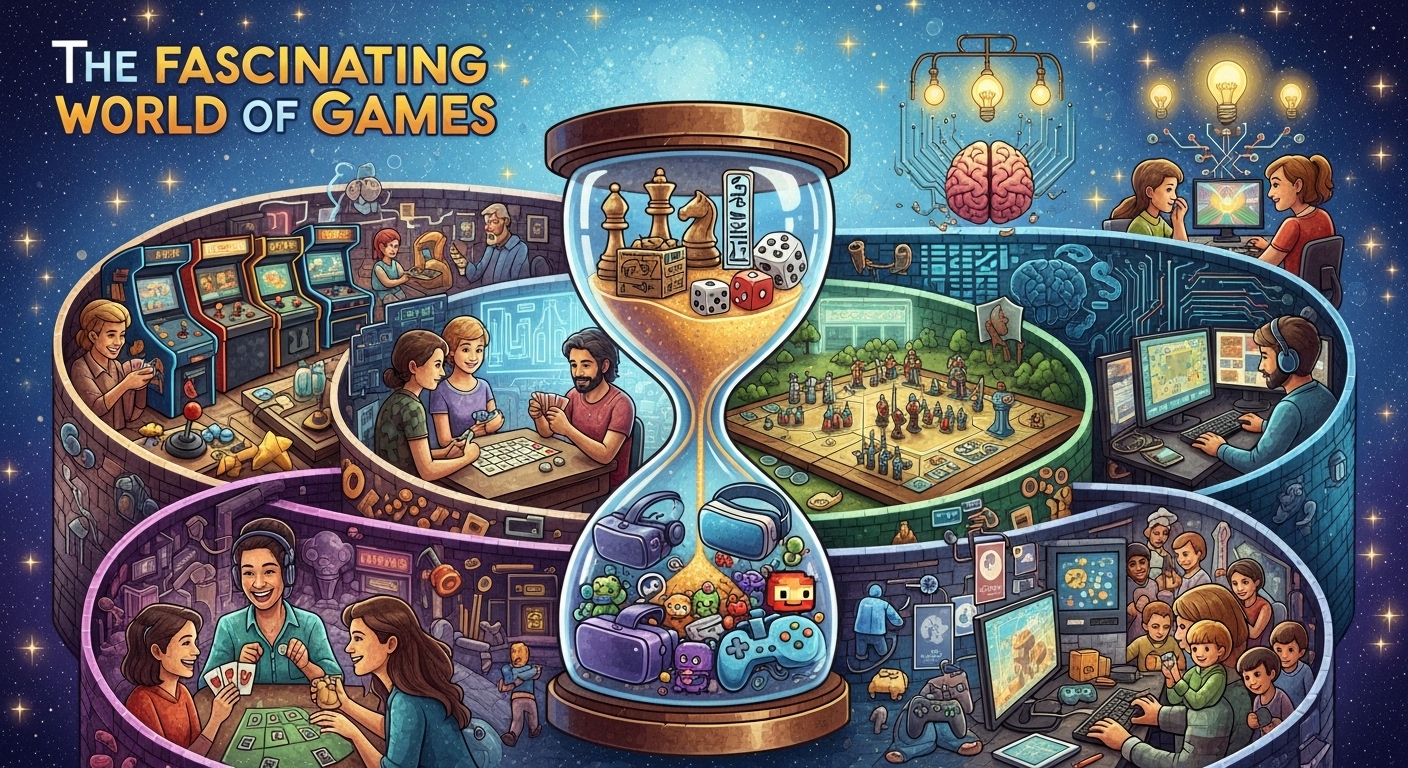
Games have been an integral part of human culture since the dawn of civilization. From the earliest board games carved into stone to the complex digital universes of modern video games, the concept of play has evolved into one of the most influential and multifaceted aspects of our lives. Games not only entertain us but also educate, challenge, and connect people across the world. Whether you are a casual player or a competitive gamer, there is no denying the universal appeal of games and the endless creativity they inspire.
The Origins of Games
Long before video games and digital screens, humans found joy and competition through physical and mental play. Ancient civilizations such as Egypt, China, and Mesopotamia created some of the earliest recorded games. Senet, one of the oldest known board games, dates back to around 3100 BCE in Egypt. It involved a simple yet strategic design that mirrored the beliefs and social structures of its time. Similarly, Go, originating in ancient China, focused on territory and balance, embodying a deep philosophical significance.
Games were not merely a form of entertainment but often carried religious, educational, or social purposes. They helped people learn strategic thinking, patience, and cooperation. Even traditional sports such as wrestling, running, and archery were deeply tied to ritualistic or survival practices. Over time, these activities evolved into organized sports and formal competitions that reflected the values of different cultures.
The Rise of Modern Gaming
As societies developed, so did the sophistication of games. The 19th and 20th centuries brought about organized sports leagues, card games, and early tabletop adventures like Monopoly, Scrabble, and Chess tournaments. These games became not only pastimes but also global phenomena that shaped cultural identities and fostered social bonds.
Then came one of the most revolutionary shifts in gaming history: the digital era. The invention of computers and gaming consoles in the mid-20th century changed everything. The 1970s saw the birth of arcade classics like Pong and Space Invaders, which captivated audiences and introduced the idea that technology could be fun and interactive. This era laid the foundation for what we now call the gaming industry—a multi-billion-dollar global powerhouse that spans every continent and demographic.
The Golden Age of Video Games
The late 1980s and 1990s are often referred to as the golden age of video games. With the introduction of home consoles such as the Nintendo Entertainment System (NES), Sega Genesis, and later the PlayStation, gaming became a household experience. Titles like Super Mario Bros., The Legend of Zelda, and Sonic the Hedgehog became cultural icons that influenced generations of players.
This period also saw the birth of genres that remain popular today. Role-playing games (RPGs) introduced players to storytelling and character development, while first-person shooters (FPS) like Doom brought action and intensity to digital play. Meanwhile, sports simulations and racing games blurred the lines between real and virtual competition.
The Psychological Power of Games
One of the most fascinating aspects of gaming is its impact on the human mind. Games stimulate problem-solving skills, improve memory, and enhance coordination. They provide a sense of achievement through challenges and rewards, encouraging persistence and critical thinking. Many studies have shown that certain types of games can even reduce stress and improve cognitive flexibility.
At a deeper level, games satisfy fundamental human needs. They offer escapism, allowing players to explore worlds beyond reality. They also create opportunities for social interaction, teamwork, and even empathy, as players often step into the roles of characters facing moral or emotional challenges. The blend of competition and creativity in gaming mirrors the balance of real-life experiences, making games both educational and therapeutic.
The Evolution of Gaming Technology
Technological innovation has always driven the evolution of games. From pixelated screens to photorealistic 3D environments, the leap in visual fidelity is astonishing. Modern gaming hardware, including high-performance consoles, powerful PCs, and virtual reality (VR) systems, allows players to immerse themselves in ways previously unimaginable.
The introduction of online multiplayer games further transformed gaming from a solitary activity into a social ecosystem. Titles like World of Warcraft, Fortnite, and Call of Duty connected millions of players globally, fostering digital communities that transcend language and geography. Cloud gaming and artificial intelligence have now taken this experience even further, enabling seamless gameplay without the need for physical hardware and creating adaptive experiences tailored to each player’s style.
The Social Side of Games
Games have evolved beyond mere entertainment—they are now cultural and social phenomena. Online platforms allow players to communicate, collaborate, and compete in real time. Esports, or competitive gaming, has turned professional players into global celebrities, with tournaments watched by millions around the world.
Gaming also plays a vital role in community building. Whether through cooperative gameplay or online discussion forums, players develop friendships, share experiences, and create memories that last a lifetime. The rise of streaming platforms and content creation has also made gaming an expressive art form, allowing individuals to showcase their skills, humor, and creativity to vast audiences.
Games as a Tool for Learning
Education has increasingly embraced the power of games. Educational games teach math, language, history, and science through interactive storytelling and problem-solving mechanics. Serious games, used in professional training and simulations, prepare people for real-world challenges in medicine, aviation, and the military.
Gamification, the application of game principles in non-gaming environments, has transformed workplaces, schools, and marketing strategies. By incorporating elements like scoring, challenges, and rewards, gamification enhances motivation and engagement. This demonstrates how the spirit of play can make learning and productivity more enjoyable and effective.
The Artistic Dimension of Games
Beyond mechanics and technology, games are a legitimate form of art. They combine visual design, sound, storytelling, and interactivity to create emotional experiences. Titles such as Journey, The Last of Us, and Shadow of the Colossus demonstrate that games can evoke deep feelings of empathy, sorrow, and wonder.
Game designers, writers, and artists collaborate to craft intricate worlds that rival the complexity of novels or films. Music composition, voice acting, and environmental design contribute to the immersive nature of gaming. Just as cinema revolutionized storytelling in the 20th century, games are redefining it for the 21st.
The Global Impact of Gaming Culture
The global reach of gaming is unmatched. Today, billions of people across all ages play games on various platforms—from consoles and PCs to smartphones. Gaming has become a universal language that connects diverse cultures and generations. Events like global tournaments, fan conventions, and developer expos highlight how deeply gaming has become embedded in modern culture.
Furthermore, gaming influences fashion, art, and even politics. Game-inspired merchandise, movies, and music demonstrate the cultural power of interactive media. In some countries, government initiatives support game development as a growing industry, recognizing its potential for economic and creative growth.
The Challenges and Criticisms of Gaming
Despite its many benefits, gaming also faces criticism and challenges. Issues such as addiction, excessive screen time, and toxic online behavior are real concerns. Some argue that certain types of games promote violence or isolation, though research on these claims remains divided.
The industry also grapples with ethical issues such as labor practices, representation, and the influence of monetization models like microtransactions. Developers and communities alike are actively addressing these concerns, promoting healthier gaming habits and advocating for inclusivity and diversity in game design.
The Future of Gaming
The future of gaming is incredibly promising. Emerging technologies such as augmented reality (AR), virtual reality (VR), and artificial intelligence (AI) are shaping new ways to experience play. Imagine walking through a fully interactive digital city, where every character responds intelligently and every choice alters the world around you.
Moreover, the concept of the metaverse—a shared virtual space where users can interact, work, and play—continues to expand. Games will likely form the backbone of this digital universe, merging entertainment with social interaction, education, and creativity. Cloud-based gaming will make high-quality experiences accessible to anyone, anywhere, regardless of hardware limitations.
Sustainability is another growing focus. Game developers are becoming more conscious of environmental impact, exploring eco-friendly production practices and digital-only releases to reduce waste. The inclusivity movement within gaming also ensures that future titles will better represent the diversity of players worldwide.
The Emotional Connection of Gaming
Perhaps what makes games truly special is their emotional resonance. Players invest time, emotion, and imagination into their experiences. Whether it’s the thrill of victory, the heartbreak of a narrative twist, or the nostalgia of replaying a childhood favorite, games connect deeply to the human heart.
This emotional bond is what turns gaming from a simple pastime into a lifelong passion. It bridges generations, as parents share classic titles with their children and communities bond over shared memories. Games can make us laugh, cry, and think in ways that few other forms of media can achieve.
Conclusion: The Timeless Spirit of Play
Games, in all their forms, embody one of humanity’s oldest instincts—the desire to play, to compete, and to create. From ancient stones to digital screens, the essence of gaming remains unchanged: it is about connection, challenge, and joy.
As technology advances and creativity continues to flourish, games will remain a vital force shaping culture, education, and art. They are more than just tools of amusement; they are reflections of who we are, mirrors of imagination, and bridges between worlds both real and virtual.
In the grand story of human innovation, games remind us of the importance of curiosity and playfulness. They encourage us to dream, to explore, and to connect. The world of games will continue to evolve, but one truth will always remain: the joy of play is timeless.
About the Author