
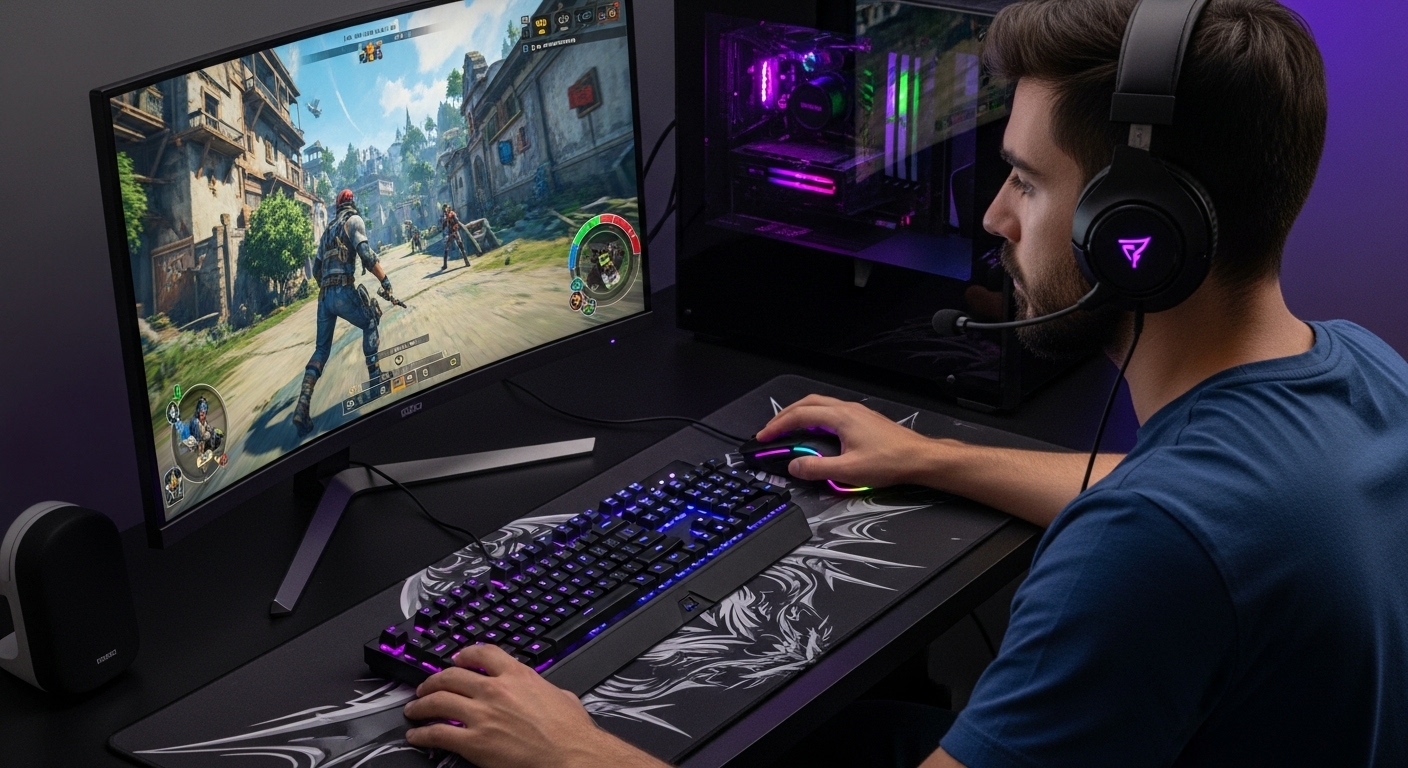
The gaming industry has grown from a niche hobby into one of the most influential forces in modern culture. What once started as a simple pastime in the 1950s has transformed into a billion-dollar global industry with millions of players across the globe. With advancements in technology, the industry has not only evolved in terms of gameplay but has also influenced various aspects of society, from entertainment and education to social dynamics and even the economy.
This post takes you on a journey through the history of video games, exploring their origins, technological advancements, cultural impact, and what the future holds for the gaming world. From arcade classics to cutting-edge virtual reality, let’s explore how video games have shaped and will continue to shape the world.
The Beginnings of Video Games: 1950s to 1970s
The history of video games dates back to the late 1950s and early 1960s when the first experimental games were created by researchers and computer scientists. These early games were largely academic experiments and were not meant for public consumption. One of the earliest examples of an interactive video game was Tennis for Two, created in 1958 by physicist William Higinbotham. The game was displayed on an oscilloscope and simulated a tennis match. However, it remained a small-scale experiment, with little impact beyond its immediate environment.
The first real “video game” that garnered widespread attention was Spacewar! (1962), developed by Steve Russell and others at MIT. Unlike Tennis for Two, Spacewar! was designed for play on early computer systems. It was one of the first multiplayer video games, allowing two players to control spaceships and engage in combat. Spacewar! was not commercially available, but it spread through the hacker and computer science communities, inspiring the first wave of commercial arcade games.
The 1970s marked the birth of commercial arcade gaming. One of the most pivotal moments came in 1972 when Atari released Pong, a simple but addictive table tennis simulation. Pong was the first video game to be commercially successful, leading to the rapid proliferation of arcade machines in bars, arcades, and restaurants. This period marked the beginning of the video game industry as we know it today, where gaming was no longer confined to research labs and academic institutions.
The Rise of Home Consoles: Late 1970s to 1980s
While arcade gaming was booming, the next major step in the evolution of video games came with the advent of home consoles. The late 1970s saw the first commercially successful home video game console, the Atari 2600, which was released in 1977. The Atari 2600 used interchangeable cartridges, allowing players to enjoy a wide variety of games on a single system. This innovation helped move gaming out of arcades and into living rooms, making it more accessible to the general public.
The popularity of the Atari 2600 led to a boom in the home console market. However, this boom was short-lived, and the early 1980s saw the infamous video game crash of 1983. The market became saturated with low-quality games, many of which failed to meet consumer expectations. Additionally, the crash was exacerbated by the lack of consistent quality control and the overwhelming number of console choices. Many companies went bankrupt, and the gaming industry experienced a significant decline.
But the crash did not spell the end of video gaming. It was, in fact, the beginning of a new era. In 1985, Nintendo entered the scene with the release of the Nintendo Entertainment System (NES). Unlike its predecessors, the NES introduced strict quality control measures, ensuring that only high-quality games were released for the platform. Super Mario Bros., which was released in 1985, became a massive hit and helped solidify the NES as one of the most successful gaming consoles of all time. The NES laid the foundation for modern video gaming, establishing Nintendo as a major player in the industry.
In addition to Super Mario Bros., the NES featured iconic games like The Legend of Zelda, Metroid, and Donkey Kong, which helped define the future of gaming. With the success of the NES, home consoles were firmly established as a staple in entertainment, and gaming began to emerge as a mainstream form of media.
Technological Advancements and 3D Gaming: 1990s
The 1990s marked a significant turning point in the gaming industry, with the introduction of 3D graphics, more powerful hardware, and the rise of new gaming consoles. During this period, Sony entered the gaming market with the PlayStation, which was released in 1994. The PlayStation’s 32-bit processor allowed for significantly more detailed graphics than previous consoles, making it possible for developers to create more immersive and complex game worlds.
One of the defining features of 3D gaming was the introduction of Super Mario 64 in 1996, which revolutionized the platformer genre by incorporating three-dimensional movement and environments. This game was a technical marvel at the time and showcased the full potential of 3D graphics on a home console. Super Mario 64 set a new standard for 3D games and is considered one of the greatest video games of all time.
Meanwhile, on the PC front, first-person shooters (FPS) became a dominant genre in the 1990s. Titles like Doom (1993) and Quake (1996) were pioneering examples of immersive, fast-paced action games that allowed players to experience virtual worlds from a first-person perspective. These games also played a significant role in the rise of online multiplayer gaming, which would later become a central part of the gaming experience.
The 1990s also saw the rise of the Final Fantasy series, which helped define the role-playing game (RPG) genre. Final Fantasy VII, released in 1997, was a landmark moment in RPGs, featuring a vast, open world, an intricate storyline, and groundbreaking CGI cutscenes. The success of Final Fantasy VII not only brought the RPG genre to the mainstream but also solidified PlayStation’s position as a leader in the gaming industry.
Online Gaming and the Digital Revolution: 2000s
The 2000s saw the rapid expansion of online gaming, changing the way people interacted with video games. The rise of broadband internet allowed gamers to connect with each other over long distances, creating the foundation for the online multiplayer experiences that dominate the gaming world today.
Microsoft’s Xbox, released in 2001, introduced Xbox Live, an online service that allowed players to compete against others, chat with friends, and download content. This was a game-changer for console gaming, and it set the stage for the future of online gaming. The launch of Halo 2 in 2004 was another defining moment in the rise of online multiplayer gaming, as it became one of the first games to showcase the true potential of internet connectivity for consoles.
On the PC side, online multiplayer games like World of Warcraft (2004) and Counter-Strike (1999) became incredibly popular, creating virtual worlds where players could interact, form teams, and compete for dominance. These games laid the groundwork for the esports industry, which would grow exponentially in the years to come.
The digital distribution of games also began to take off in the 2000s, with services like Steam allowing players to purchase, download, and play games without needing physical copies. This shift toward digital gaming gave indie developers an unprecedented opportunity to reach a global audience. Games like Braid, Portal, and Minecraft were successful not just because of their innovative gameplay but also due to the ease with which players could access them.
The 2000s also saw the advent of mobile gaming, with the rise of smartphones and tablets. Angry Birds and Candy Crush Saga became massive hits, marking the beginning of a new era where gaming was not confined to home consoles or PCs. Mobile games are now one of the most popular and lucrative forms of gaming, attracting players of all ages and backgrounds.
The Age of Streaming and Virtual Reality: 2010s and Beyond
As we entered the 2010s, the gaming industry continued to push technological boundaries. The rise of streaming platforms like Twitch and YouTube allowed gamers to broadcast their gameplay to a global audience, creating a new form of entertainment. Gamers became content creators, and esports tournaments began to attract millions of viewers, making gaming a legitimate part of the entertainment industry.
The 2010s also saw the rise of virtual reality (VR) gaming. The release of the Oculus Rift in 2016 and PlayStation VR marked the beginning of a new era in immersive gaming experiences. VR technology allows players to step into a game world in a way that was previously unimaginable. Though VR has yet to achieve mainstream success, it remains an exciting frontier for developers to explore.
Another important development in the gaming industry is the increasing focus on open-world games. Titles like The Witcher 3: Wild Hunt (2015), Red Dead Redemption 2 (2018), and Horizon Zero Dawn (2017) allowed players to explore vast, immersive worlds full of complex narratives and dynamic interactions. These games pushed the limits of what was possible in terms of storytelling, graphics, and world-building.
Cloud gaming, which allows players to stream games directly from the internet without the need for high-end hardware, also began to emerge in the late 2010s. Services like Google Stadia, Xbox Cloud Gaming, and NVIDIA GeForce Now aim to make gaming more accessible by removing the need for expensive gaming PCs or consoles.
Gaming’s Cultural and Social Impact
Gaming is no longer just a form of entertainment—it has become a cultural force that shapes social interactions, storytelling, and even politics. Video games have become an essential part of pop culture, with game franchises like Super Mario, Pokémon, and Zelda being recognized worldwide. Characters like Mario, Sonic, and Lara Croft have achieved iconic status, and gaming references are commonplace in movies, TV shows, and advertisements.
Furthermore, gaming has become a global social phenomenon. Online multiplayer games create virtual spaces where people from different countries and cultures can interact, collaborate, and compete. This has led to the creation of vibrant gaming communities, some of which have even led to the development of professional esports leagues. Competitive gaming is now a multibillion-dollar industry, with professional players earning millions of dollars in sponsorships and tournament winnings.
Gaming also plays a significant role in education and skill development. Games like Minecraft and Portal encourage creativity, problem-solving, and teamwork, while others like SimCity and Civilization teach players about city planning, economics, and history. The potential for gaming to teach and inform has led to its adoption in classrooms, where educators use games to engage students and make learning more interactive.
The cultural impact of gaming is also seen in its growing inclusivity. The gaming industry is increasingly recognizing the need for diverse representation, both in terms of characters and players. Many developers are working to create more inclusive and representative games that appeal to a wider audience, and women, minorities, and LGBTQ+ communities are now more prominently featured in both the development and consumption of games.
Conclusion: The Future of Gaming
From its humble beginnings in research labs to the global entertainment powerhouse it is today, video gaming has come a long way. Technological advancements, such as 3D graphics, online connectivity, and virtual reality, have transformed the gaming experience, while cultural shifts have made gaming an integral part of mainstream society.
Looking ahead, the future of gaming is bright. As technology continues to evolve, we can expect even more immersive and interactive gaming experiences. Virtual reality, augmented reality, cloud gaming, and artificial intelligence will likely shape the next generation of video games. Additionally, the growing interest in esports, game streaming, and mobile gaming points to a continued evolution of how games are played and consumed.
In the end, gaming is not just a hobby; it is a form of entertainment, art, and culture that has reshaped our world. Its journey is far from over, and the best is yet to come.
About the Author