
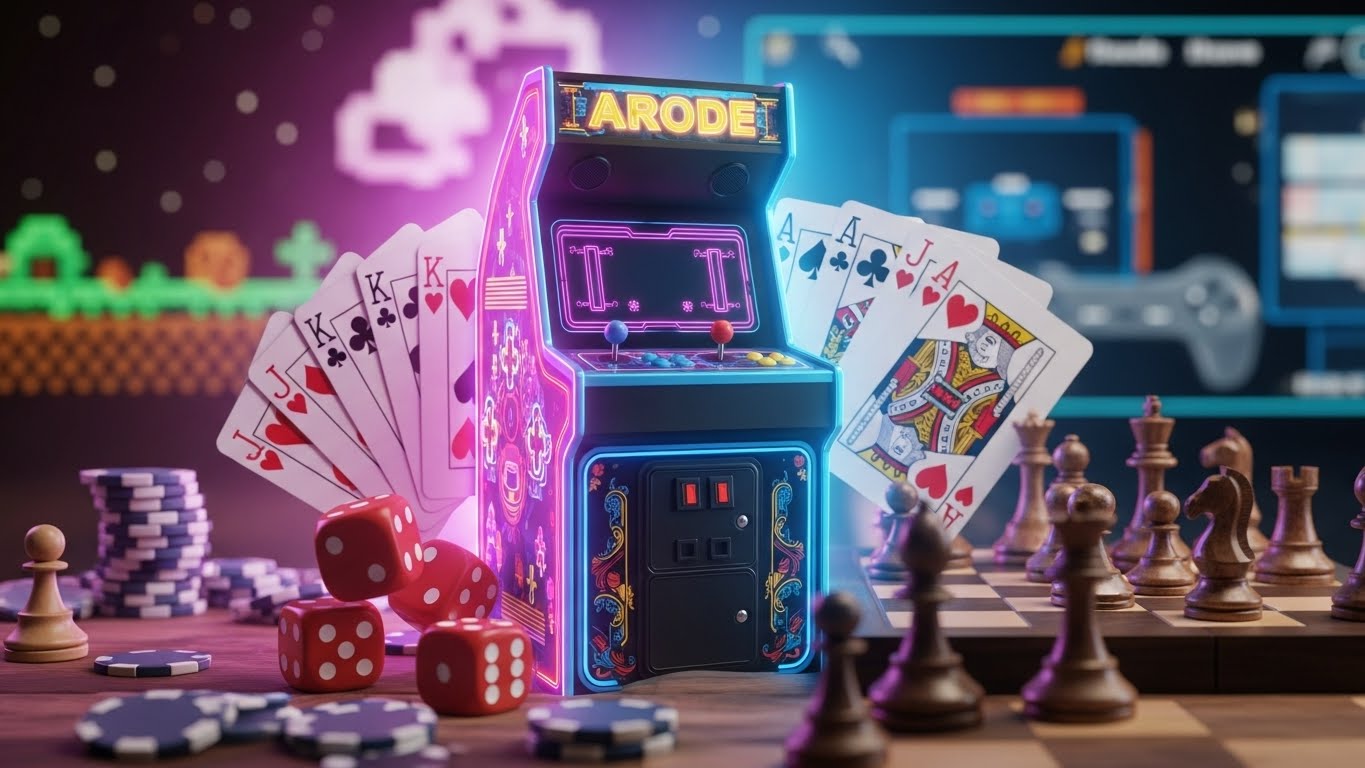
Gaming has evolved from a simple pastime into a cultural phenomenon that spans across generations and continents. What started with basic pixelated graphics and limited gameplay has expanded into fully immersive digital universes. From arcade cabinets to high-definition consoles and virtual reality (VR), the world of gaming has changed dramatically. This blog post explores the rich history, technological advancements, and future trends of the gaming industry, shedding light on the forces shaping this ever-evolving form of entertainment.
The Beginnings: Simple Pixels and Arcades
The journey of gaming began in the 1950s and 1960s, with the first experiments in interactive entertainment. Early games like Tennis for Two (1958) and Spacewar! (1962) laid the groundwork for the medium, but it was in the early 1970s that gaming truly began to enter the public consciousness.
The 1972 release of Pong by Atari, the first commercially successful arcade game, is often seen as the starting point of the video game industry. The simplicity of Pong, a two-player ping-pong simulation, captivated audiences with its addictive, yet straightforward, gameplay. By the mid-1970s, arcades became cultural hubs, with games like Space Invaders, Asteroids, and Pac-Man taking over. These games offered more complexity, introducing new gameplay mechanics and graphics that pushed the boundaries of what was possible at the time.
As arcade games grew in popularity, so did home consoles. The release of the Atari 2600 in 1977 marked the beginning of home gaming. This console allowed people to play games like Space Invaders and Pitfall at home, providing the first glimpse of gaming outside arcades. The 1980s was a pivotal decade for the gaming industry, with companies like Nintendo, Sega, and Atari pushing the boundaries of what could be achieved in both the arcade and home console spaces.
The Rise of Home Consoles and PCs
The 1980s and 1990s saw the home gaming experience evolve rapidly. In 1985, Nintendo released the Nintendo Entertainment System (NES), which brought about a new golden age of gaming. Iconic titles like Super Mario Bros., The Legend of Zelda, and Metroid showcased the potential of gaming to tell rich stories and create engaging worlds. The NES was a game-changer, offering gamers more control over their gaming experience and an evolving library of titles.
Around the same time, the personal computer (PC) gaming market was also booming. Games like Doom (1993) and Warcraft (1994) revolutionized the PC gaming scene by introducing new genres such as first-person shooters (FPS) and real-time strategy (RTS). These games were able to offer more intricate, immersive experiences thanks to the power of the personal computer, which could handle more complex graphics and larger game worlds than traditional consoles.
The 1990s also saw the rise of 3D gaming. Titles like Super Mario 64 (1996) and The Legend of Zelda: Ocarina of Time (1998) ushered in an era of fully three-dimensional environments. These games were groundbreaking, offering players fully immersive worlds that they could explore in new ways. The PlayStation console from Sony, released in 1994, was a key player in this era, becoming home to numerous classic games that still influence the industry today.
Online Gaming and Multiplayer Evolution
One of the most significant shifts in gaming came with the advent of online multiplayer gaming. As the internet became more widespread in the late 1990s and early 2000s, it opened up new possibilities for gamers to connect with one another. The launch of Xbox Live in 2002 and the PlayStation Network in 2006 made it easier than ever for players to compete against or cooperate with others around the globe.
The late 1990s and early 2000s also saw the rise of massively multiplayer online role-playing games (MMORPGs). EverQuest (1999) and World of Warcraft (2004) were among the first games to offer expansive online worlds where thousands of players could interact with each other in real-time. These games didn’t just offer combat and adventure—they introduced complex economies, social systems, and massive raids, creating virtual societies within the game. World of Warcraft, in particular, became a global phenomenon, with millions of active subscribers and a massive cultural impact.
As broadband internet connections became more ubiquitous, online multiplayer games began to evolve. In the first-person shooter (FPS) genre, titles like Halo 2 (2004) and Call of Duty: Modern Warfare (2007) brought new levels of competitiveness and realism to the online gaming world. These games helped elevate esports, turning gaming from a casual hobby into a spectator sport, with professional teams, tournaments, and sponsorships drawing large audiences both online and in-person.
The Era of Digital Distribution
As gaming technology continued to improve, so did the ways in which games were distributed. The early days of gaming relied heavily on physical media—cartridges, CDs, and DVDs—but the rise of broadband internet and digital distribution platforms in the 2000s began to change that. Steam, launched in 2003, was a pioneering force in the world of digital distribution for PC games, allowing players to purchase, download, and play games directly on their computers. Over time, Steam became the dominant platform for PC gaming, offering everything from major AAA titles to independent games created by small studios.
Consoles were not far behind in embracing digital distribution. Sony’s PlayStation Network (PSN) and Microsoft’s Xbox Live Marketplace allowed users to download games directly to their consoles, making the process of acquiring games faster and more convenient. Digital downloads also made it easier for smaller developers to release their games, leveling the playing field and allowing for more diversity in gaming content.
The rise of digital distribution also led to the growth of indie gaming. Developers no longer had to rely on publishers to get their games into the hands of players. Platforms like Steam, the PlayStation Store, and the Nintendo eShop allowed indie developers to reach a global audience without the need for physical distribution. Games like Undertale (2015), Hollow Knight (2017), and Celeste (2018) demonstrated the potential of indie games to thrive in the competitive gaming market.
The Next Frontier: Virtual Reality and Augmented Reality
As technology continues to advance, the future of gaming is increasingly focused on virtual reality (VR) and augmented reality (AR). VR gaming has grown in popularity in recent years, offering players fully immersive experiences that place them inside the game world. VR headsets like the Oculus Rift, HTC Vive, and PlayStation VR have allowed players to interact with their virtual surroundings in ways that were previously unimaginable. Games like Beat Saber, Half-Life: Alyx, and The Walking Dead: Saints & Sinners have showcased the potential of VR to create entirely new types of gaming experiences.
While VR immerses players in fully virtual environments, AR gaming blends the real world with digital elements. Games like Pokémon GO (2016) made use of AR technology to encourage players to explore their physical surroundings while capturing virtual creatures. AR games hold the potential to change the way we interact with both the real and virtual worlds, creating new opportunities for interactive storytelling, education, and entertainment.
Both VR and AR represent a new frontier for gaming, pushing the boundaries of what is possible in digital entertainment. As the technology continues to improve, we can expect even more innovative gaming experiences that offer unprecedented levels of immersion and interactivity.
The Growing Influence of Esports
Esports, or competitive gaming, has become a global phenomenon, with professional leagues, tournaments, and massive audiences. The rise of games like League of Legends, Dota 2, Overwatch, and Fortnite has helped transform gaming from a casual hobby into a professional sport. Major esports events like The League of Legends World Championship and The International for Dota 2 attract millions of viewers, both online and in-person, with multi-million-dollar prize pools.
Esports has also opened up new career opportunities for gamers, with professional players, streamers, and commentators building lucrative careers by competing, broadcasting, and creating content. Platforms like Twitch and YouTube Gaming have turned gaming into a spectator sport, with millions of fans tuning in to watch live gameplay and engage with their favorite creators.
Esports is expected to continue its rapid growth, with traditional sports organizations and brands investing heavily in competitive gaming. The industry’s expansion has also led to the rise of college and university esports programs, where students can earn scholarships and compete at the highest levels.
The Future of Gaming: Cloud Gaming and AI Integration
As we look to the future of gaming, two key technologies are poised to shape the industry: cloud gaming and artificial intelligence (AI). Cloud gaming, which allows players to stream games directly from remote servers, is set to revolutionize how we play games. Services like Google Stadia, Xbox Cloud Gaming (formerly Project xCloud), and NVIDIA GeForce Now are already pushing the boundaries of what’s possible with cloud gaming, offering high-quality gaming experiences without the need for expensive hardware.
Cloud gaming also promises to make gaming more accessible by eliminating the need for powerful consoles or PCs. Players will be able to access the latest games from virtually any device, whether it’s a smartphone, tablet, or smart TV. This democratization of gaming could lead to an even more widespread global gaming community.
About the Author